Survival Thai · No. 24 · TIME
How to Ask What Time It Is in Thai
What time is กี่โมง (gìi-moong). O'clock is โมง (moong). Ask once a day, hear โมง in every answer — six Thai time words and how the Thai clock differs.
The words on this page
Tap any word to hear it. 6 of 6 have audio; tap the Thai to open its full pronunciation page.
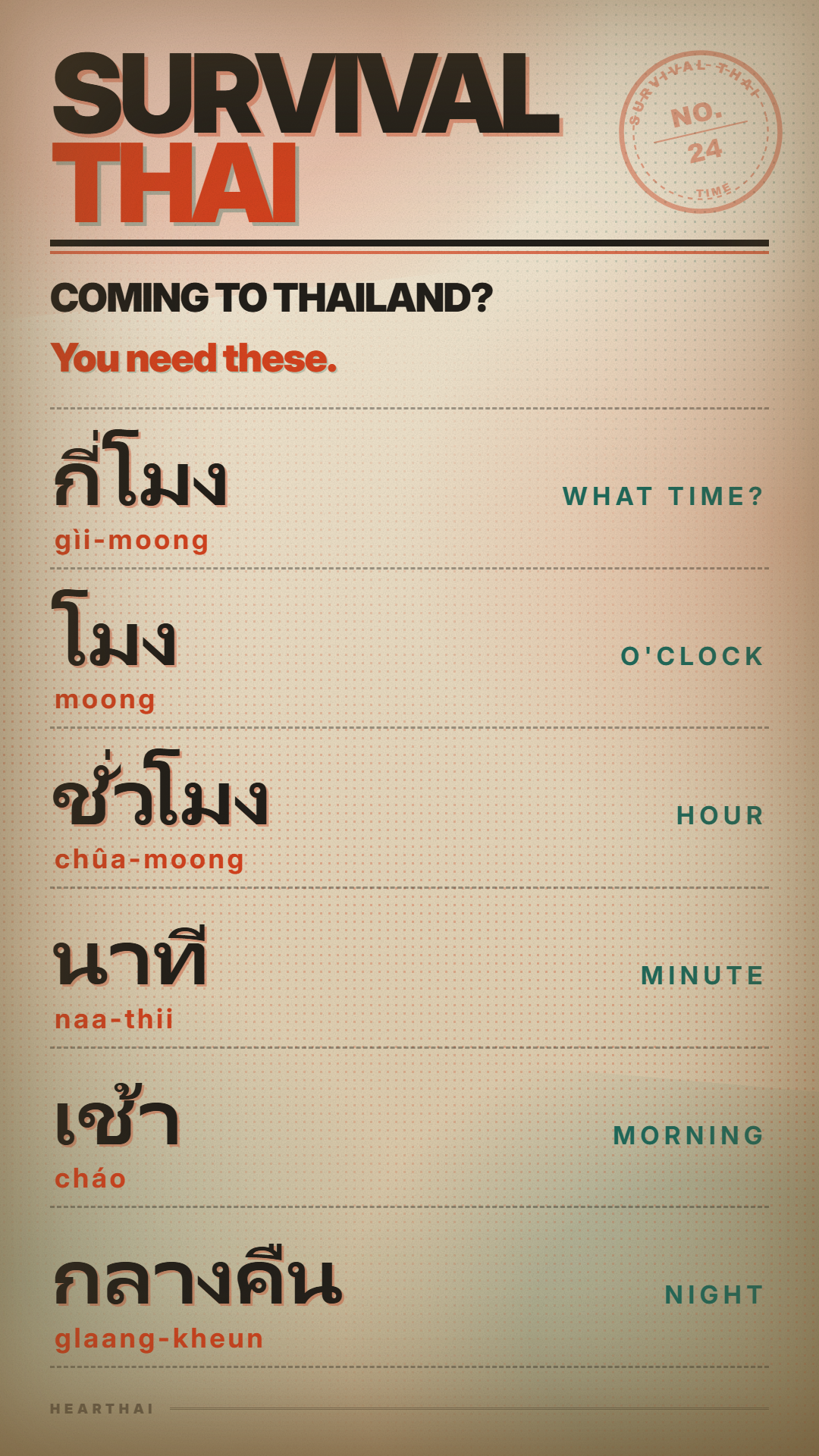
กี่โมง gìi-moong — "what time?" You'll ask it about once a day, and every answer that comes back will contain โมง moong, o'clock.
The other three you need are ชั่วโมง chûa-moong an hour, นาที naa-thii a minute, and the two ends of the day: เช้า cháo morning and กลางคืน glaang-kheun night.
The honest warning about telling time in Thai
Spoken Thai does not simply count 1 to 12 twice around the clock the way English does. The traditional system divides the day into blocks and uses different words depending on which part of the day you're in — which is why the answer to gìi-moong sometimes contains moong and sometimes doesn't sound like anything you were expecting.
You do not need to master that system to survive here, and pretending otherwise is how beginner Thai gets discouraging. What you need is: ask the question, then get the answer confirmed on a phone screen or with fingers. Every Thai person you ask will do this happily.
The full clock system is worth learning properly later. It's genuinely interesting and it is not a beginner topic.
The two words that survive any confusion
chûa-moong (hour) and naa-thii (minute) are the ones to lean on, because they're used exactly the way you'd expect and no clock system interferes with them. A number plus naa-thii is a duration — ten minutes — and it answers the two questions you'll ask most often: how long is the journey, and how long is the wait.
Note the shape of chûa-moong — the moong from o'clock, sitting inside the word for hour. The language is being tidy with you.
cháo and glaang-kheun
เช้า cháo is morning, and it's earlier than most visitors think — Thailand starts early, markets are busiest before you're awake, and cháo genuinely means the early part of the day rather than "before noon."
กลางคืน glaang-kheun is nighttime as a period. Note that it contains the same kheun you met at the hotel desk, where it meant a night's stay. Same piece, two jobs: one counts your nights, one names the dark hours.
How punctual is Thai time?
Scheduled transport mostly departs on time — planes, ferries and buses leave when they say, so turn up early. Long-distance trains are the well-known exception; they routinely arrive late, and locals plan around it rather than being surprised by it. Social arrangements run looser too, and a 7pm dinner starting at 7:30 surprises nobody.
The one time it matters is the airport transfer, where the traffic on the page about taxis eats whatever margin you thought you had. Leave earlier than the map says.
Takeaways
gìi-moong= what time?moong= o'clock, and it's in every answer.- Thai's spoken clock uses day-part blocks, not a simple 1-12 count. Confirm on a screen.
chûa-moonghour andnaa-thiiminute behave normally — lean on those.cháomorning starts early here;glaang-kheunis nighttime.- Planes, ferries and buses leave on time; long-distance trains and dinners run late. Leave extra margin for airports.
These are 6 words.
HearThai Academy trains your ear on 25,000.
Premium audio for every word, the tone mechanics behind it, and games that make your ear do the work. Start free — no card.
Create a free accountFree trial. No card required.